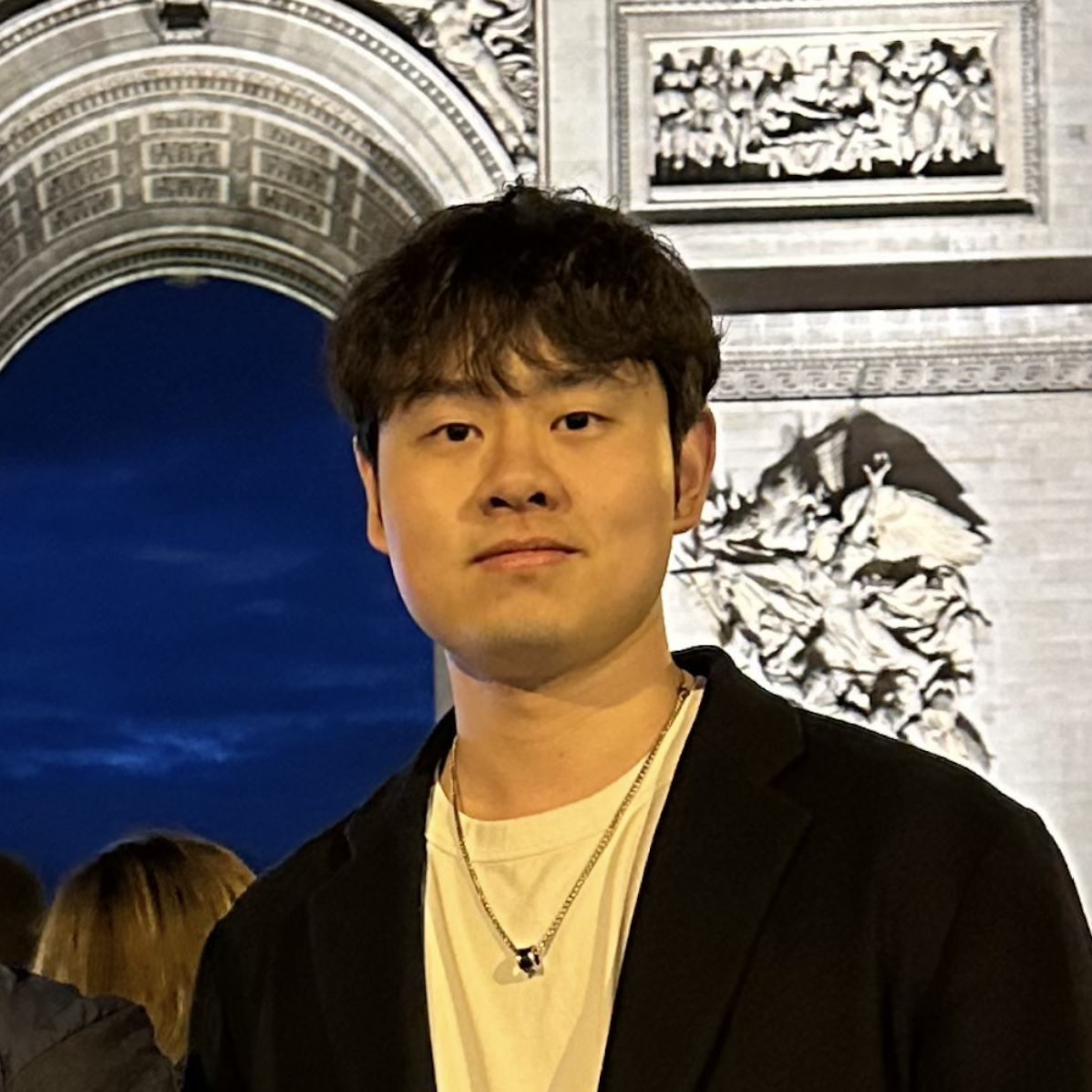
I’m a Speech & Audio AI Researcher with a Ph.D. in Computer Science and Engineering from The Ohio State University, where I was advised by Prof. DeLiang Wang. I have 6+ years of research experience in speech and machine learning, with a focus on robust and multilingual automatic speech recognition (ASR), speech LLMs, speech foundation models, source separation, and multi-channel speech modeling.
Feel free to contact me via email: yfyang@ieee.org.
Education
- Ph.D. in Computer Science and Engineering, The Ohio State University - Columbus, OH, 2020-2026
- Advisor: Prof. DeLiang Wang
- M.S. in Electrical and Computer Engineering, Georgia Institute of Technology - Atlanta, GA, 2018-2020
- Advisor: Prof. David V Anderson
- B.E. in Information Engineering, Southeast University - Nanjing, China, 2014-2018
- Advisor: Prof. Chuan Zhang
Industry Experience
- Research Engineer, Netflix (June 2026 - Now)
- Fine-tuned and improved an LLM-based multilingual ASR model for subtitle and dubbing scripts, outperforming the production baseline across 30+ languages and diverse content types
- Designed data cleaning and filtering pipelines for large-scale training data, including format normalization, audio-text mismatch filtering, and repetition cleaning, mitigating model hallucinations and improving training data quality
- Conducted large-scale multilingual model training and evaluation, and debugged model and training pipeline issues to improve training stability and ASR performance
- Research Scientist Intern, Meta (May - August 2025)
- Proposed multi-channel differential ASR for smart glasses, improving robustness of wearer speech recognition in real-world scenarios against side-talk
- Integrated complementary frontends for on-device streaming ASR without increasing latency
- Demonstrated that the proposed system outperforms the internal baseline with up to 18% relative WER reduction under streaming and on-device Bluetooth bandwidth constraints
- Resulted in a first-authored paper accepted to Interspeech 2026
- Research Scientist Intern, Meta (May - August 2024)
- Proposed M-BEST-RQ, a novel array-agnostic multi-channel speech foundation model for smart glasses
- Demonstrated that the model trained on one device generalizes across different wearable devices on conversational ASR, source localization, and wearer VAD
- With only 8 hours of labeled speech for fine-tuning, the proposed model achieved a 3% absolute WER reduction over a baseline trained on 2k hours of labeled data for conversational ASR, demonstrating strong label efficiency
- Resulted in a first-authored paper accepted to ICASSP 2025
- Research Intern, Mitsubishi Electric Research Laboratories (May - August 2023)
- Developed unsupervised source separation methods leveraging self-supervised learning representations for multi-talker scenarios
- Evaluated separation quality and representation transfer across different acoustic conditions
- Research Intern, Microsoft Research Asia (May - August 2019)
- Developed and evaluated models for overlapped speech detection and speaker separation in conversational scenarios
Publications
Yufeng Yang, Cheng Yu, Vahid Ahmadi Kalkhorani, and DeLiang Wang, “Robust streaming ASR with decoupled separation and recognition,” in Proc. Interspeech, 2026, pp. 6584-6588. [pdf]
Yufeng Yang, Yiteng Huang, Yong Xu, Li Wan, Suwon Shon, Yang Liu, Yifeng Fan, Zhaojun Yang, Olivier Siohan, Yue Liu, Ming Sun, and Florian Metze, “Multi-channel differential ASR for robust wearer speech recognition on smart glasses,” in Proc. Interspeech, 2026, pp. 4762-4766. [pdf]
Yufeng Yang, Hassan Taherian, Vahid Ahmadi Kalkhorani, and DeLiang Wang, “Elevating robust multi-talker ASR by decoupling speaker separation and speech recognition,” Speech Communication, vol. 182, article 103427, 2026. [pdf]
Heming Wang, Yufeng Yang, and DeLiang Wang, “A speech prediction model based on codec modeling and transformer decoding,” Computer Speech & Language, article 101892, 2026. [pdf]
Yufeng Yang, Ashutosh Pandey, and DeLiang Wang, “Towards decoupling frontend enhancement and backend recognition in monaural robust ASR,” Computer Speech & Language, article 101821, 2026. [pdf]
Yufeng Yang, Desh Raj, Ju Lin, Niko Moritz, Junteng Jia, Gil Keren, Egor Lakomkin, Yiteng Huang, Jacob Donley, Jay Mahadeokar, and Ozlem Kalinli, “M-BEST-RQ: A multi-channel speech foundation model for smart glasses,” in Proc. IEEE ICASSP, 2025, 5 pages. [pdf]
Yufeng Yang, Hassan Taherian, Vahid Ahmadi Kalkhorani, and DeLiang Wang, “Elevating robust ASR by decoupling multi-channel speaker separation and speech recognition,” in Proc. IEEE ICASSP, 2025, 5 pages. [pdf]
Yufeng Yang, Ashutosh Pandey, and DeLiang Wang, “Time-domain speech enhancement for robust automatic speech recognition,” in Proc. Interspeech, 2023, pp.4913-4917. [pdf]
Yufeng Yang, Peidong Wang, and DeLiang Wang, “A Conformer based acoustic model for robust automatic speech recognition,” arXiv:2203.00725, 2022. [pdf]
Desmond Caulley, Yufeng Yang, and David Anderson, “EACELEB: an east Asian language speaking celebrity dataset for speaker recognition,” arXiv:2203.05333, 2022. [pdf]
Chuan Zhang*, Yufeng Yang* (co-first), Shunqing Zhang, Zaichen Zhang, and Xiaohu You, “Residual-based detections and unified architecture for massive MIMO uplink,” Journal of Signal Processing Systems, vol. 91, no. 9, pp. 1039–1052, 2019. [pdf]
Yufeng Yang, Wence Zhang, Jiejun Jin, Zaichen Zhang, Xiaohu You, and Chuan Zhang, “Efficient compressed Landweber detector for massive MIMO,” in Proc. IEEE SiPS, 2018, pp. 65–70. [pdf]
Yufeng Yang, Ye Xue, Xiaohu You, and Chuan Zhang, “An efficient conjugate residual detector for massive MIMO systems,” in Proc. IEEE SiPS, 2017, pp. 1–6. [pdf]
Academic Services
Reviewer for:
- IEEE ICASSP
- Interspeech
- IEEE SLT
- IEEE Signal Processing Letters
- IEEE Transactions on Signal Processing
- Computer Speech & Language
- IEEE MWCAS
- IEEE ISCAS
Volunteer for:
- IEEE WCSP
Awards
- National Scholarship, Ministry of Education, China, 2015
- Meritorious Winner, Interdisciplinary Contest in Modeling (ICM), 2016
- Leike Scholarship, Southeast University, 2016
Acknowledgments